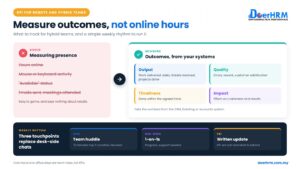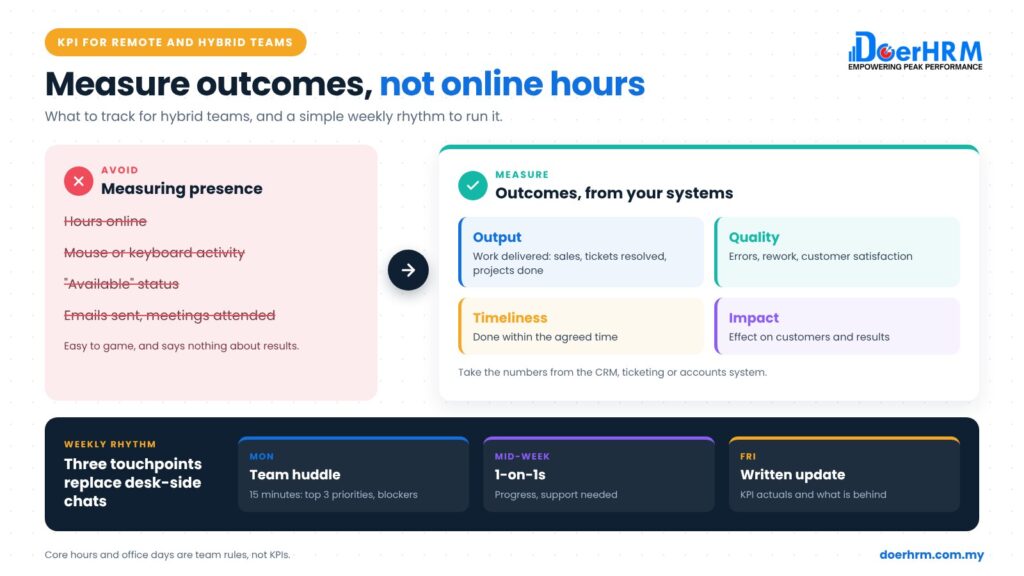
To set KPIs for remote teams, measure outcomes, not online hours. Give each person 4 to 7 KPIs on results they control, such as tickets resolved, sales closed or reports delivered on time. Each KPI needs a target and a data source from a system. Then review progress in a short weekly check-in.
Key takeaways
- Measure what people deliver, not how long they appear online.
- A good remote KPI looks the same whether the person works at home or in the office.
- Avoid hours online, mouse activity and “available” status. They measure presence, not results.
- A weekly rhythm (Monday huddle, mid-week 1-on-1s, Friday update) replaces the desk-side chat.
By Ng Shone Fone, Founder and CEO of DoerHRM, with 30 years in business.
When half the team works from home, many managers feel they have lost sight of the work. The quick fix is to track who is online. But that does not tell you whether customers were served. This guide shows how to set KPIs for hybrid teams that work wherever people sit, inside your wider KPI performance management system.
How do you measure remote employee performance?
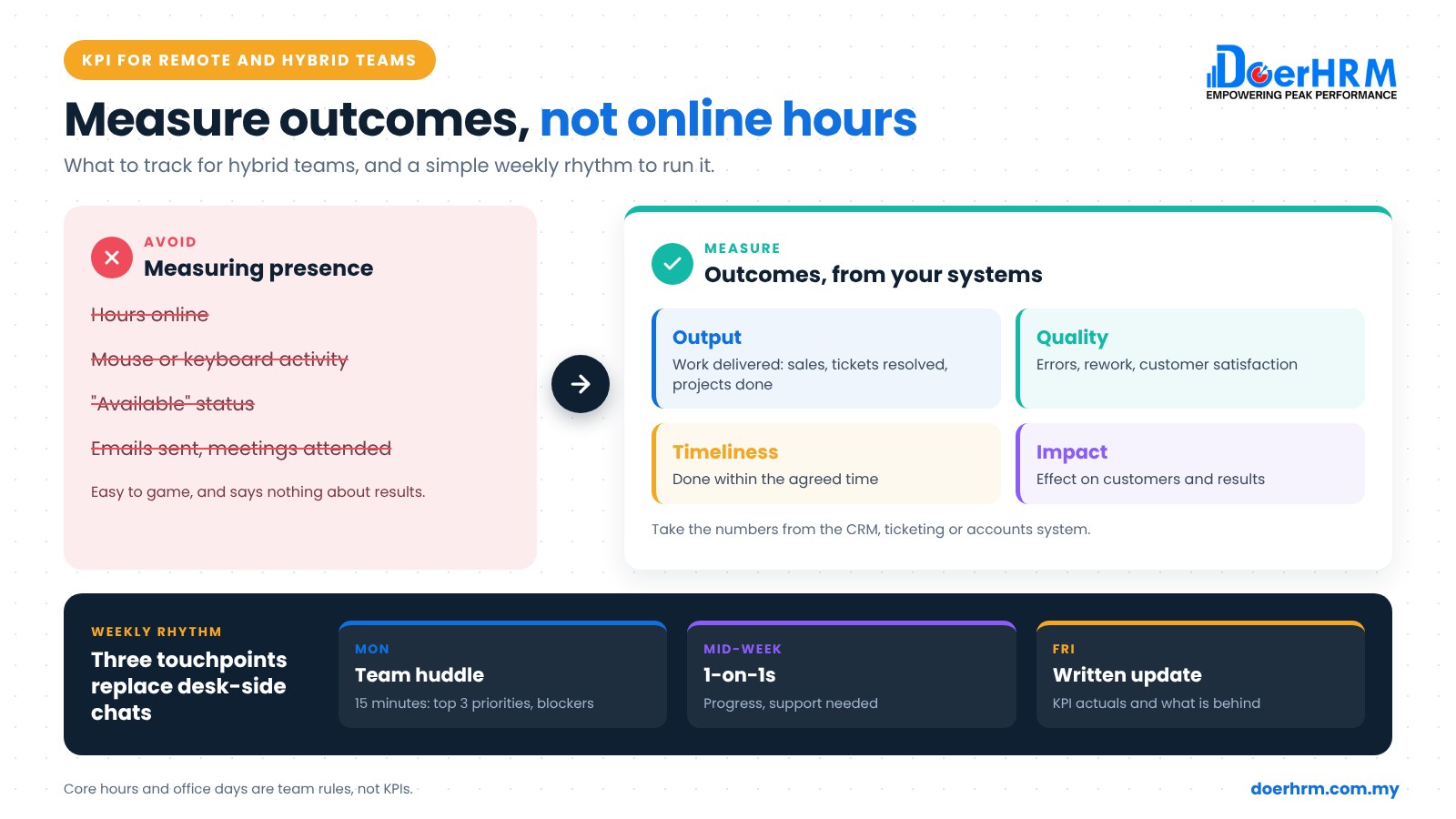
Measure remote employee performance by the results they deliver: output, quality, timeliness and customer impact. Use data from your systems, such as the ticketing system, CRM or accounts software, rather than log-in time or activity tracking.
Test each KPI with three questions:
- Can you see the result without watching the person? “Invoices processed without error” passes.
- Does it matter to a customer or to the company? If nobody would notice when it drops, it is not a KPI.
- Does it look the same at home and in the office? If not, rewrite it.
What should you avoid measuring for remote staff?
Avoid measuring presence: hours online, mouse or keyboard activity, “available” status, emails sent or meetings attended. These are easy to game and say nothing about results. They also signal distrust, which hurts the people you most want to keep.
In our KPI workshops, managers of hybrid teams often ask how to track hours online. Our answer: what would you do with the number? Someone can be online for eight hours and resolve very little.
If you use monitoring software, tell staff what is collected and why, and check your personal data obligations with an adviser first.
Which KPIs for remote teams work in each role?
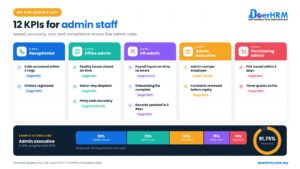
The best KPIs for remote roles come from systems that already record the work. The table shows outcome KPIs for five common roles, and the activity measures to avoid.
| Role | Remote-friendly KPIs | Avoid measuring |
|---|---|---|
| Sales | Sales vs target (RM); new qualified opportunities per month; quotation conversion rate | Hours online; calls logged per day without outcome; time spent in the CRM |
| Customer service | % of tickets resolved within 24 hours; customer satisfaction score (CSAT); first-contact resolution rate | “Available” status; time online; number of chat messages sent |
| Finance / admin | Month-end close by working day 5; % of invoices processed without error; % of supplier payments made on time | Keystrokes; emails sent; time logged in the accounts system |
| Marketing | Qualified leads passed to sales; campaigns delivered on schedule; cost per lead (RM) | Number of posts published; hours in design tools; meetings attended |
| IT / support | % of tickets resolved within the agreed time; system uptime; project milestones delivered on time | Mouse activity; screen time; lines of code written |
Give each person 4 to 7 KPIs, each with at least 10% weight. Our guide to KPI weightage shows how. For more role-based lists, see our employee KPI examples.
How do you set KPIs for a hybrid team, step by step?
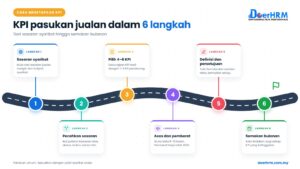
Start with the team’s goals, turn each goal into an outcome KPI with a system data source, agree it with each person, and then review it every week.
- Start from team goals. Ask what the team must deliver this quarter. Our goal setting guide helps you link team goals to company goals.
- Turn each goal into an outcome KPI. Write the formula, the target and where the data comes from.
- Check the data source. Use a system record, not a manager’s impression. If no data exists, choose another KPI.
- Keep the list short. 4 to 7 KPIs per person, each with a weight of at least 10%.
- Agree working norms separately. Core hours and office days are team rules, not KPIs.
- Agree and review. Confirm the KPIs with each person in writing, then review them weekly.
If you formalise hybrid work in a company policy, check any legal requirements on flexible working with an employment law adviser.
What does a weekly check-in rhythm look like for a hybrid team?
A simple weekly rhythm has three touchpoints: a short team huddle on Monday, 1-on-1s in mid-week, and a written KPI update on Friday. Together they take less time than unplanned “just checking” messages.
| When | What | Time | Output |
|---|---|---|---|
| Monday | Team huddle (online or in the office) | 15 minutes | Top 3 priorities for the week; blockers raised |
| Tuesday to Thursday | 1-on-1 with each person, weekly or every two weeks | 20 to 30 minutes | KPI progress, support needed, one action |
| Friday | Written update from each person | 10 minutes each | KPI actuals updated; one line on what is behind and why |
| Last week of the month | Monthly KPI review | 30 to 45 minutes | Scores against target; actions for KPIs that are behind |
In DoerHRM, staff post weekly KPI updates and check-ins, and managers record 1-on-1 meetings and feedback in the same place.
Worked example: a 6-person customer service team (hypothetical)
Hypothetical example: a Malaysian online retailer has six customer service agents who work three days a week from home. Their supervisor tracked hours online. Everyone looked busy, but only 80% of tickets were resolved within 24 hours, against a 90% target.
In month 1, every agent averaged 7.7 to 8.0 hours online a day. The ticket data told another story:
| Agent | Avg hours online per day | Tickets handled | Resolved within 24 hours | % within 24 hours |
|---|---|---|---|---|
| Aina | 7.9 | 420 | 395 | 94.0% |
| Ravi | 7.8 | 400 | 368 | 92.0% |
| Mei Ling | 8.0 | 410 | 369 | 90.0% |
| Hafiz | 7.9 | 380 | 266 | 70.0% |
| Daniel | 7.7 | 390 | 273 | 70.0% |
| Priya | 7.8 | 400 | 249 | 62.3% |
| Team | 2,400 | 1,920 | 80.0% |
The supervisor dropped the hours report. She set three KPIs: % resolved within 24 hours (target 90%), CSAT (target 4.3 out of 5) and first-contact resolution (target 70%). She started the weekly rhythm above.
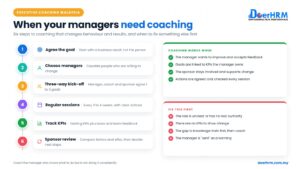
The first 1-on-1s found the real causes:
- Hafiz and Daniel handled most billing complaints, which waited days for a reply from finance. Finance named one contact to answer billing queries the same day.
- Priya, in her second month, had no one to ask on home days. She was paired with Aina for quick questions.
By month 3, the team resolved 2,184 of 2,400 tickets within 24 hours: 91.0%, above target. CSAT rose from 4.1 to 4.4. Hours online did not change. What changed was what the supervisor measured.
Frequently asked questions
How do you measure remote employee performance? Measure the results people deliver, such as sales, tickets resolved, accuracy and on-time delivery, using data from your systems. Review progress in a short weekly check-in instead of tracking hours online.
What are good KPIs for remote teams? Outcome KPIs from systems that already record the work: sales vs target, % of tickets resolved on time, customer satisfaction, month-end close date, error rate and project milestones delivered on time.
Should I track hours online for remote staff? Not as a KPI. Hours online measure presence, not results, and are easy to game. Agree core hours as a team rule if you need people to be reachable.
Are KPIs for hybrid teams different from office KPIs? They should be the same KPIs. A good KPI works wherever the person sits. What changes is how you review them: a planned weekly rhythm replaces informal desk-side conversations.
How often should managers check in with remote staff? A weekly team huddle, a 1-on-1 with each person every one or two weeks, and a monthly KPI review work well for most teams.
Conclusion
KPIs for remote teams work when they measure outcomes, not online hours. Choose 4 to 7 results each person controls, take the data from your systems, and keep a steady weekly rhythm of huddles, 1-on-1s and written updates.
Want your managers to set outcome KPIs for hybrid teams with confidence? Request a customised KPI workshop proposal, tailored to your roles and work arrangements.
Ng Shone Fone is the Founder and CEO of DoerHRM and Group CEO of Obsnap. With 30 years in business, he is a Certified HRD Corp Trainer who helps Malaysian companies set clear, fair KPIs.